


What it's made of
Our materials
What a product needs to do determines what it is made of.


Two true, two not
Leather and faux leather
Four materials that look similar but behave completely differently. Two are real leather, two are not. We explicitly state this, as it determines what you can expect from a product.
Products in
Eco-leather, calfskin and buffalo leather

Eco-leather
Eco-leather is a leather-look material based on polyurethane — synthetic leather, not an animal product. It is the material of our placemats, table runners, tablecloths, and bread baskets.
It feels supple and has a refined appearance, but the reason we use it is more practical: the PU finish is hard-wearing, the material can be cleaned with a damp cloth, and it withstands intensive daily use. In a business where tables are set and cleared daily, that's the difference between a season and years.
You'll find it in: placemats, table runners, tablecloths, bread baskets
Recycled leather
Recycled leather — also known as regenerated leather — consists of leather fibers that are reassembled into a sheet. It is not synthetic leather and not full-grain leather, but its own category with its own legal description.
The material has a stain-resistant treatment, is lightweight, and has a slightly fabric-like texture. It is suitable for intensive use, including outdoors. We use it for menu covers, where a flexible cover and low weight are more important than rigidity.
You can find it in: menu covers
Calfskin
Calf leather is genuine leather, recognizable by its fine, even grain. It feels soft and supple and has a refined appearance — it is the material for products that need to look well-maintained in the guest's view.
It combines that elegance with sturdiness. With proper care, calf leather retains its character for years. With us, it is reserved for the Classic Line, exclusively in black.
You will find it in: wallets and portfolios from the Classic Line
Buffalo leather
Buffalo leather is genuine leather with a distinct, irregular grain structure. It feels sturdier than calfskin and looks more robust. Where calfskin offers refinement, buffalo leather adds character.
It is exceptionally durable and develops its own patina over time. No two pieces age identically – that's part of its charm and precisely why you choose it. For us, it is the material of the Gladiator Line, available in brown and black.
You'll find it in: wallets and portfolios from the Gladiator Line


Cork, cellulose, jute
Materials with a natural structure
Three materials with a distinct structure, all three used for menu cards. Two of them are plant-based, one has the look without the origin. We also simply state that.
In these materials
Indoor and outdoor menus


Cork
Cork is the bark of the cork oak, combined here with recycled leather as a backing. The result is a flexible cover of medium weight with a tactile, irregular texture.
Cork is naturally hygienic and sturdy, and suitable for intensive use, including outdoors. It is the choice for businesses that want an ecological material without compromising on finish.
You can find it in: menu cards
Cellulose
Cellulose is FSC-certified plant-based fiber. It is light to the touch, has a clearly visible texture, and a distinct ecological appearance.
It is intended for respectful use — not for the most intensive environments, but for items where the card is handled with care. In the high-end segment, this is often precisely the intention.
You'll find it in: menus
Juta
Our jute is PVC with a jute texture, not the plant fibre itself. This makes it suitable for conditions where real jute would fail.
The material is anti-bacterially certified, has a stain-resistant treatment, and can withstand very intensive use, both indoors and outdoors. Flexible cover, medium weight. If your menus are on a terrace and glasses are placed on them daily, this is the material that can withstand it.
You'll find it in: menu covers


Four fabrics for the service
Textiles
The fabrics of our clothing line. Two basic fibres — cotton and polyester — and two technical fabrics built upon them. What you choose depends on what you ask of a garment: comfort, shape retention, moisture wicking, or freedom of movement.
Products in
Cotton, polyester, Coolmax, stretch
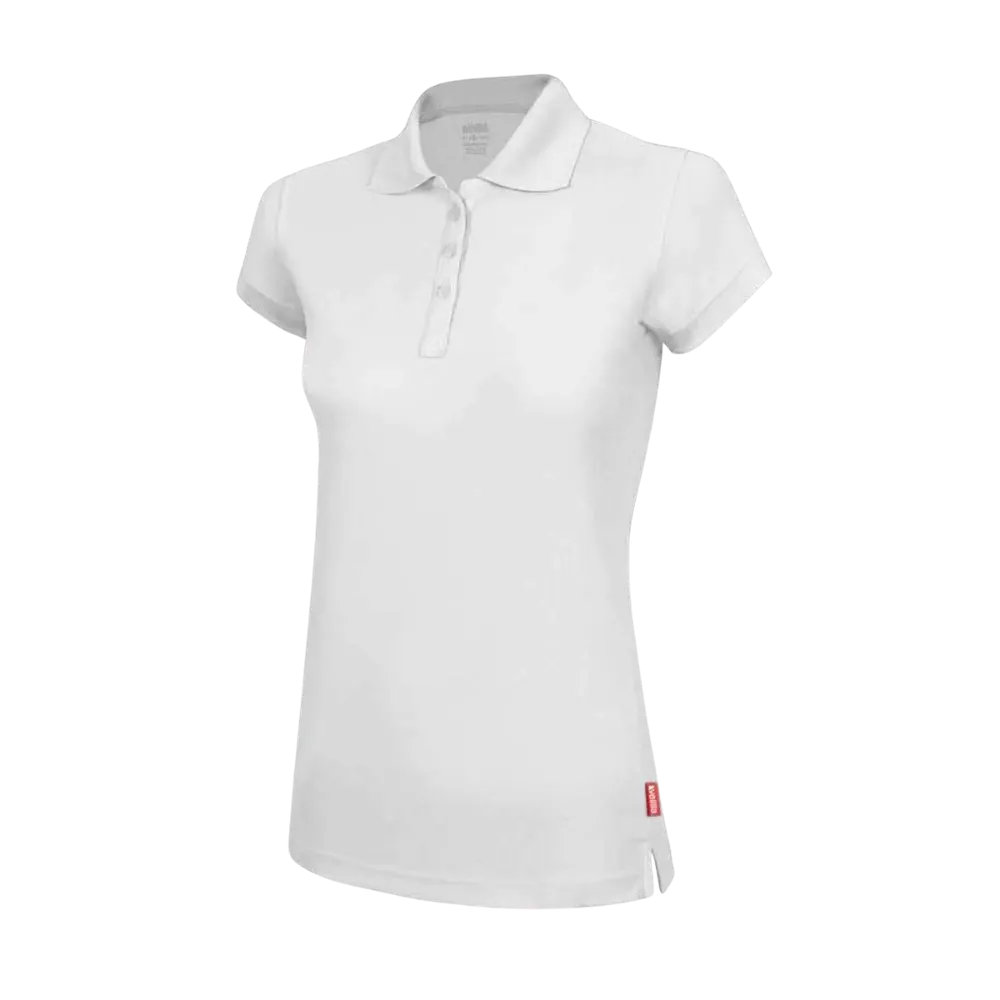

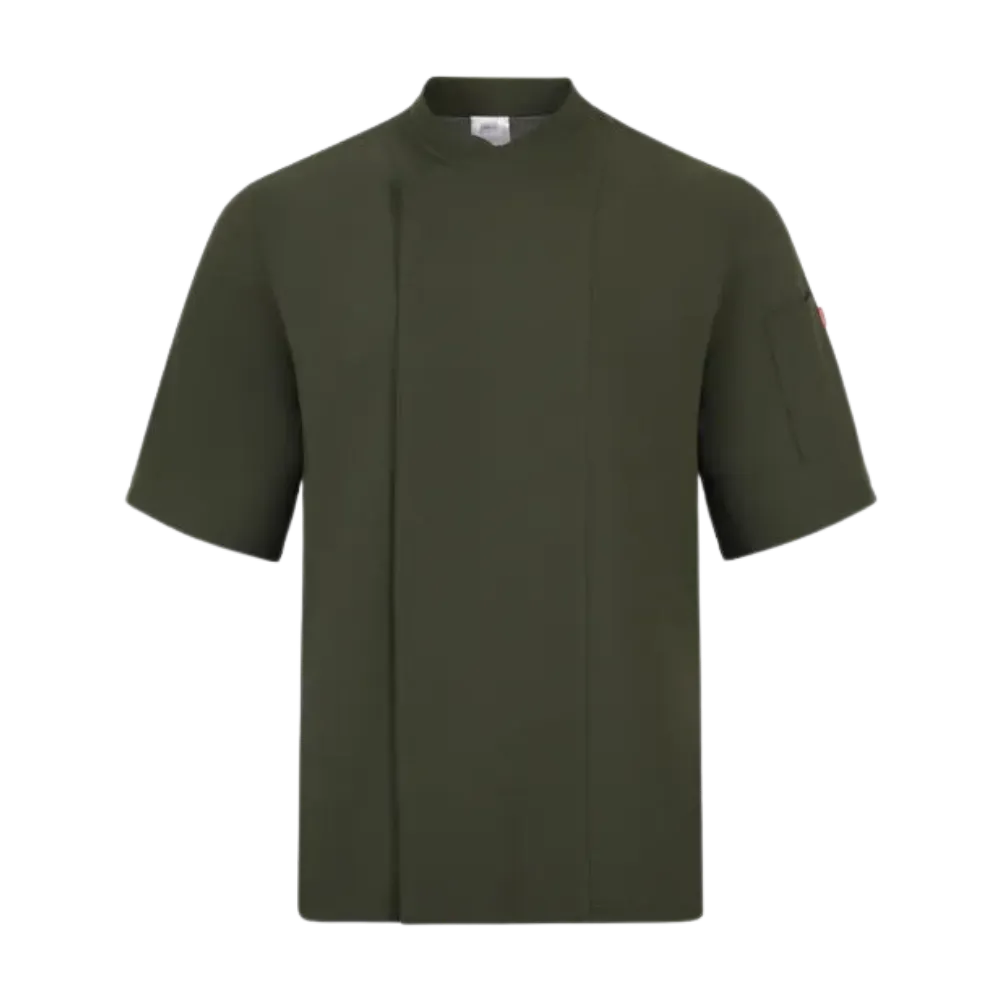


Cotton
Cotton is a natural fiber that feels pleasant and soft and is breathable. Its strong fiber structure makes it resistant to intensive daily use and frequent washing.
It is the choice when wearing comfort is paramount — a garment that sits against the skin for an entire shift.
You'll find it in: aprons, shirts, chef jackets
Polyester
Polyester is a synthetic fibre that is strong, shape-retaining and hard-wearing. It is easy to clean and retains colour and shape even after dozens of washes.
Where cotton provides comfort, polyester provides durability. In practice, you often see the two together: a blend combines the breathable properties of cotton with the shape retention of polyester.
You will find it in: aprons, chef jackets, front-of-house clothing
Coolmax
Coolmax is not a separate type of fiber but a brand name: a specially developed polyester fiber from The Lycra Company. The difference from regular polyester lies in the shape of the fiber.
Where a normal fiber is round, a Coolmax fiber has channels along its length. These increase the surface area by about a fifth and together form a transport system that wicks moisture from the skin to the outside of the fabric, where it evaporates faster. The result is a garment that helps regulate your body temperature instead of retaining moisture.
For a kitchen, that's not a luxury. Next to a stove, it makes the difference between a bearable shift and a long one.
You'll find it in: chef's jackets
Stretch poplin
Stretch poplin is not a fiber but a fabric: poplin with an elastic component. Poplin is a fine, densely woven fabric with a smooth surface; the elastic component gives it stretch.
That stretch is there to allow for movement — reaching, lifting, carrying — without the fabric resisting. In addition, the fabric is tear-resistant, wrinkle-free, and quick-drying, which simplifies maintenance.
You'll find it in: shirts
Maintenance by Material
- Eco-leather - Damp cloth, mild soap. Do not machine wash, do not use aggressive cleaners. Pavelinni cleaning spray.
- Recycled leather - Damp cloth. Stain-resistant treatment does most of the work.
- Calf leather - Wipe dry, periodically nourish with leather balm. Do not soak.
- Buffalo leather - Wipe dry, periodically nourish. Patina is not wear and tear.
- Cork - Damp cloth. Do not soak.
- Cellulose - Wipe dry. Not suitable for wet cleaning.
- Jute - Damp cloth, even for stubborn stains.
- Cotton - Machine wash, temperature according to wash label.
- Polyester - Machine wash, low temperature. Dries quickly.
- Coolmax - Machine wash without fabric softener — it obstructs moisture wicking.
-
Stretch poplin - Machine wash, low temperature. Wrinkle-free, ironing usually unnecessary.

@Pavelinni
Still need help?
Frequently Asked Questions About Materials
No. Eco-leather is a leather-look material based on polyurethane — artificial leather. It contains no animal leather. Our placemats, table runners, tablecloths, and bread baskets are made from this. We only use real leather for wallets and portfolios: calfskin in the Classic Line, buffalo leather in the Gladiator Line.
Calf leather has a fine, even grain and feels soft and supple — refined. Buffalo leather has a distinct, irregular grain structure and feels firmer — robust. Both are suitable for intensive use. Choose calf leather for refinement, buffalo leather for character and patina.
No, these are embossed prints. The underlying material is recycled leather. There is no crocodile or ostrich skin involved.
Coolmax is polyester—a brand name for a specially developed fiber, not a separate fiber type. The difference lies in the shape: Coolmax fibers have channels along their length that wick moisture away from the skin to the outside of the fabric. You'll notice that difference in a warm kitchen.
For outdoor menus: jute or cork. Both are suitable for very intensive use and have a stain-resistant treatment. Cellulose is not – that material is intended for protected, respectful use indoors.
That depends on use and maintenance. Eco-leather, buffalo leather, and jute are designed for intensive daily use. Calf leather will last for years provided it is periodically nourished. Cellulose is the most delicate material in the range and is suitable for those who handle their cards with care.